Screen gain
A relative indication of on-axis brightness compared with a standard reference surface. Higher is not automatically better; distribution and room conditions matter.
Fresnel / light control
Follow the light
A simplified side view. Select each step to see the principle.
A UST projector sits below and close to the screen. Its image reaches the surface at a steep angle.
This diagram explains direction only. It is not a ray-traced model, an ALR percentage, or a measured comparison. The interior and macro images elsewhere on this page are illustrative.
The principle, plainly
Ordinary matte-white screens are intentionally broad reflectors. That makes them flexible—but it also means they reflect room light toward the viewer along with projector light.
A Fresnel screen behaves differently. Its optical structure is directional. It is intended to accept the steep upward light path of a UST projector and send much of it outward toward the audience.
ALR does not mean ambient light disappears. It means direction becomes useful.
At the scale of the surface
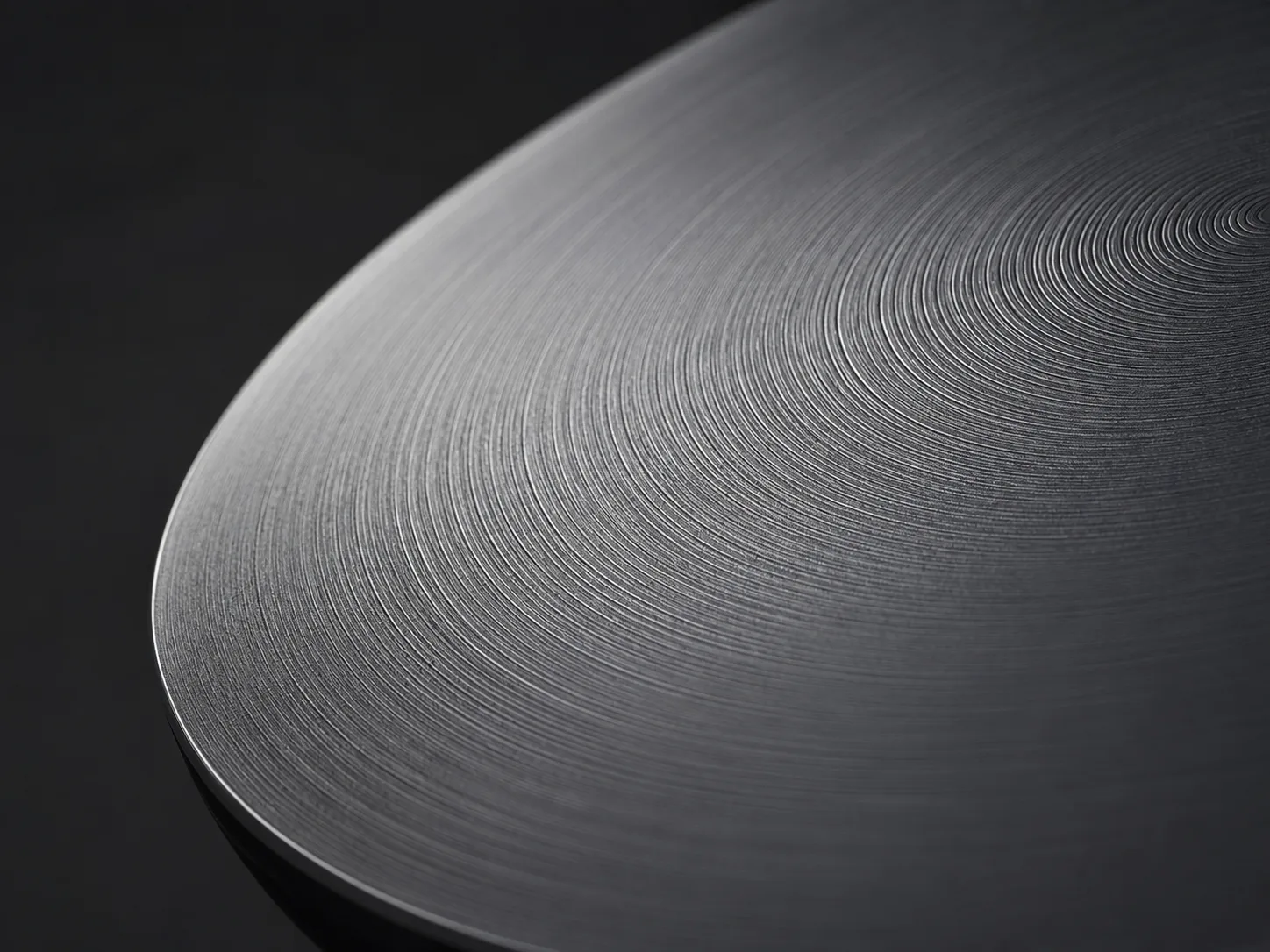
Fresnel geometry redirects light from a UST projector toward the viewing area. The illustration enlarges this idea; it is not a microscope photograph or a measured surface profile.
The screen material must be handled carefully and installed in the correct orientation.
After the image
A relative indication of on-axis brightness compared with a standard reference surface. Higher is not automatically better; distribution and room conditions matter.
An approximate horizontal range over which the image is intended to remain useful. Directional screens trade some off-axis uniformity for light control.
The native shape used by most home UST systems and contemporary video content.
Approximate LUMAYNE values are pending final production verification.
Orientation matters
Because the optical structure is directional, a Fresnel screen cannot be rotated casually. Installed upside down, the surface can direct projector light away from the seating position.
The final product and installation guide will identify the top edge clearly. Check it before the screen is tensioned and again before it is mounted.
Plan the installationPut the optics to work
A large-format fixed-frame screen shaped for the light path of UST projection.
Explore Fresnel 120